Your prototype is finished. You send the CAD files to five manufacturers?
Then the quotes arrive.
One says $25 per unit.
Another says $80.
A third asks you to pay $15,000 for tooling.
So which one is correct?
Possibly none of them.
The problem is that many startups ask for a manufacturing quote before they have fully defined what they actually want to manufacture.
A manufacturer can only quote based on the information in front of them. But the same product can have completely different manufacturing costs depending on the decisions behind it.
Are You Quoting a Prototype or a Production Product?
This is one of the first things to define.
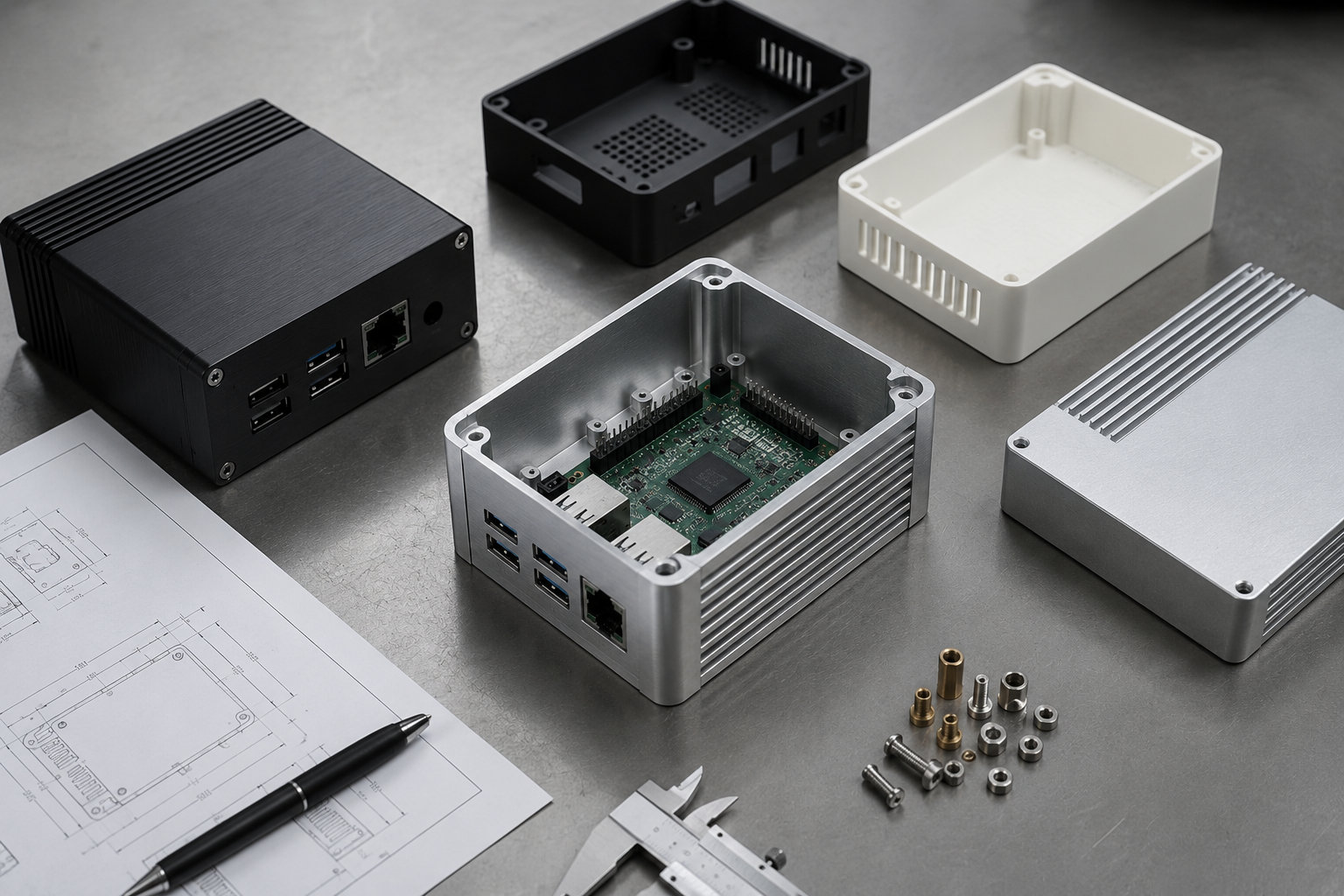
A CNC-machined aluminium enclosure may be an excellent solution for:
10 units.
But would it still make sense for:
10,000 units?
Maybe not.
At higher volumes, processes such as injection moulding or die casting may change the economics completely.
The important question isn't simply:
“How much does it cost to make this?”
It is:
“How many do I need, and what manufacturing process makes sense for that quantity?”
Your CAD Model May Not Be Ready to Quote
A beautiful CAD model doesn't automatically mean a manufacturer has enough information to produce the product correctly.
For example:
Which dimensions are critical?
What tolerances are required?
What material should be used?
What surface finish is required?
How should the parts fit together?
Does the product need to be waterproof?
Are cosmetic surfaces important?
How will the product be assembled?
If these requirements are unclear, different manufacturers will make different assumptions.
And suddenly, you're not comparing five quotes for the same product.
You're comparing five different interpretations of your product.
Tight Tolerances Can Change Everything
Imagine putting a very tight tolerance on every dimension simply because you want a “high-quality product.”
That doesn't necessarily improve the product.
It may only increase:
machining time
inspection requirements
rejection rates
manufacturing cost
The better approach is to identify the dimensions that actually affect:
fit → function → assembly → performance.
Those dimensions deserve tighter control.
The others may not.
A good manufacturing quote should reflect what the product actually needs—not maximum precision everywhere.
Material Choice Can Make Your First Quote Misleading
A material may work perfectly for your prototype but create unnecessary problems in production.
For example, your prototype may use:
CNC-machined aluminium
a high-performance engineering plastic
stainless steel
But the final production quantity, product environment and manufacturing method may suggest a different material.
Changing the material later can also mean changing:
tooling → wall thickness → tolerances → surface finish → manufacturing process.
This is why material selection should not be treated as a simple item on a quotation.
The Cheapest Quote May Be Missing Something
This doesn't necessarily mean the supplier is dishonest.
They may simply have quoted exactly what they understood.
But did they include:
assembly?
surface treatment?
inspection?
packaging?
fixtures?
tooling?
engineering changes?
shipping?
A quote that appears significantly cheaper may not be quoting the same scope.
Before comparing prices, compare:
What exactly is included in each manufacturing route?
Tooling Changes the Calculation
For many startups, tooling is the biggest shock.
Injection moulding may require a significant upfront investment.
But the part cost may become much lower at volume.
CNC machining may have almost no dedicated tooling cost—but the cost per part remains relatively high.
So there is no universal answer to:
“Which manufacturing process is cheapest?”
The answer depends on:
quantity × geometry × material × tolerances × lifecycle of the product.
A process that is expensive for 20 units can be the most economical solution for 20,000.
Don't Ask Only for a Price. Ask for a Manufacturing Route.
For a new inventor or startup, the most useful first conversation isn't always:
“Please quote my CAD file.”
A better conversation is:
“This is my product. This is my expected quantity. This is how I expect it to be used. What manufacturing route should I consider?”
That discussion can identify problems before you commit to expensive tooling or production.
The Goal Is Not to Get the Cheapest First Quote
The goal is to understand:
What are we making?
How many are we making?
Which features are critical?
Which manufacturing process fits the product?
What will change as production grows?
Because a manufacturing quote is only as good as the manufacturing decisions behind it.
The right first step isn't always finding a factory.
Sometimes it's understanding what you should actually ask the factory to make.